There are so many different ways to enjoy the outdoors, and I certainly take advantage of the variety. Over the past year, for example, I’ve been mountain climbing, rock climbing, trail running, hiking, backpacking, mountain biking, cross country skiing, downhill skiing, snowboarding, and snowshoeing. Many of these activities obviously involve spending significant amounts of time in snow. In fact, aside from prolonged backpacking trips, my favorite way to experience the outdoors is by climbing mountains. I love the challenge of kicking steps up steep, snowy slopes and the pure joy of glissading back down. Most of all, I love that feeling of accomplishment I get when I finally reach the top and am rewarded with panoramic views of the surrounding peaks and the vast world below.
There are certainly many different risks involved with venturing out into the mountains. For me, the most terrifying is the fear of falling I get on steep, exposed terrain, where there is nothing but empty air below me. But while exposure may be the biggest challenge 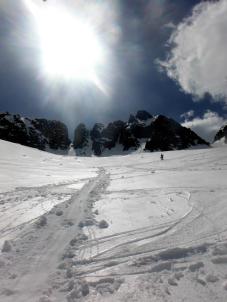 for me psychologically, there is perhaps an even more real and present threat that I, and it seems like many other mountain climbers, have not paid much attention to. So far this winter, there have been 18 avalanche fatalities in the United States. According to the Colorado Information Center, this January was the second deadliest in 20 years. While many avalanche victims are either backcountry skiers, snowboarders, or snowmobilers, climbers, hikers, and snowshoers account for a significant number of the avalanche deaths each season. Because the pack and I spend a significant amount of time in the mountains, I figured it was time I started learning about the risks of avalanches. So a few weeks ago, I participated in an introductory avalanche safety course through the American Institute for Avalanche Research and Education (AIARE).
Mount Baker Backcountry
AIARE 1 is a three day/24 hour introduction to avalanche hazard management. This particular course was organized through the Everett Mountaineers and included several weekly classroom sessions followed by a weekend-long field trip to Mount Baker. As useful as it was to read about the science and characteristics of avalanches, observing avalanche terrain in real life was crucial to bring these concepts to life.
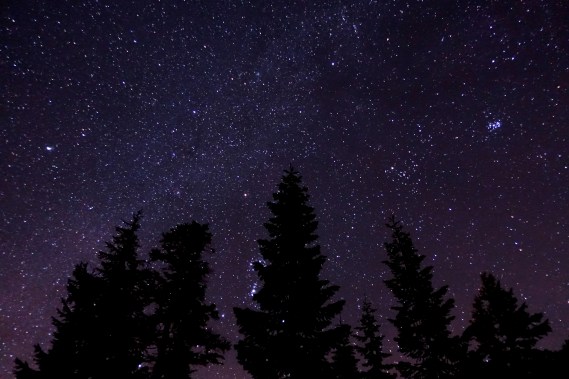
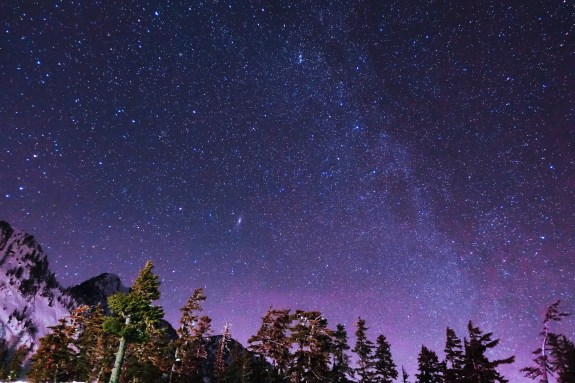
I arrived at the Mountaineers Lodge at Mount Baker late Friday night and was immediately blown away by the dazzling sky overhead. Given my new-found interest in night sky photography, I couldn’t resist the opportunity to snap a few shots. So instead of heading straight to bed like most of my fellow classmates, I grabbed my tripod and stayed up way too late taking pictures of the star-filled expanse above me. It was well after midnight when I finally tiptoed upstairs to the women’s bunk room and crawled into my sleeping bag. Wake-up time came far too early the next morning, and I would have seriously regretted my decision to stay up so late had the photos not turned out so spectacularly.
After breakfast, we broke up into our groups headed out into the backcountry. The weather was unbelievable with not a cloud in sight and a relatively mild avalanche forecast. There are apparently some years where the avalanche hazard is so high students can’t venture more than a few hundred feet away from the lodge.
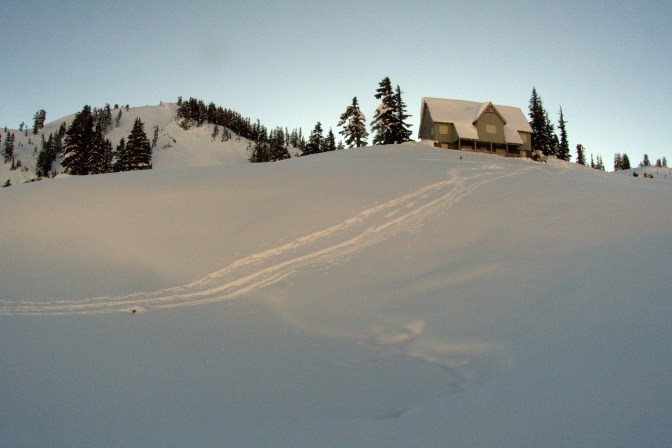
We spent most of the first day analyzing the snow pack and practicing companion rescue. For the latter, we learned how to use our avalanche gear—transceivers, probes, and shovels—to accurately locate a buried victim and then quickly dig them out. Though I’d read a fair amount about how to conduct a rescue, this real-world application was a true wake up call about the importance of technique. Because the chance of survival is significantly diminished if a buried victim is not recovered within 15 minutes, time is of the essence. Even in perfect conditions and with several people working on my team, however, our group was unable to dig quickly and efficiently enough to reach our target in time. So while I certainly feel I have a foundation, I also know I need to continue practicing these skills to really master them. Still, the only real way to ensure the safety of myself and my partner(s) is to avoid getting caught in an avalanche in the first place.
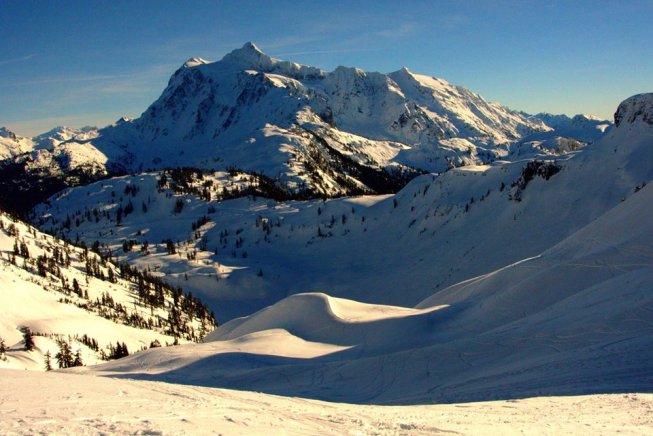
The next day, the emphasis was on terrain selection. The best way to learn how to analyze and travel safely through avalanche terrain is obviously by doing just that. Based on the avalanche forecast and our own observations, the group decided it would probably be safe to make the climb up to Herman Saddle, a small notch located between Table Mountain and Mount Herman with stunning views of both Mount Baker and Mount Shuksan. Fortunately, we didn’t see any avalanches that day. Only a couple of weeks later, however, two skiers were caught and one was killed in an avalanche at that same spot.
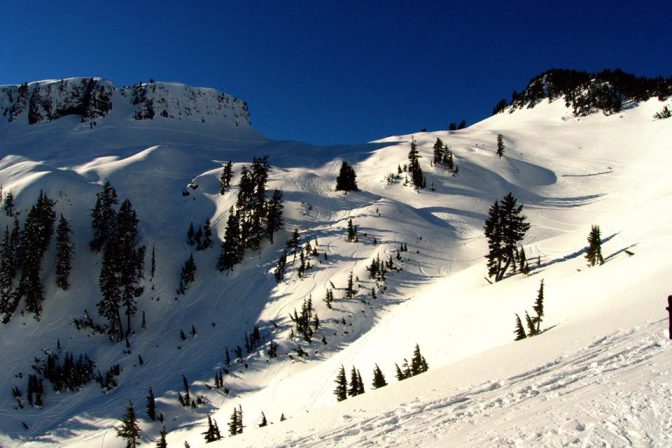
Although two of us were on snowshoes, the rest of the group had alpine touring skiis and the envy kicked in immediately. With a little extra effort, I managed to keep up with the skiers as they skinned up the snowy slopes. On the way down, however, they glided passed me as they made one smooth turn after another in the powder. I vowed that I would purchase a pair of back country skiis as soon as possible. But regardless of how I choose to travel in the backcountry, I know that by gaining at least a basic understanding of avalanches, I will be safer in the mountains.

 thetraveledtrail
Wonderful photos! Very wise to have an understanding of snow conditions and avalanches. Take care. Bob
LikeLike
Wonderful!!!!
LikeLike